On Little Sunapee Road, the Water Access You See Isn't Always the Water Access You're Buying
September 24, 2026
September 24, 2026
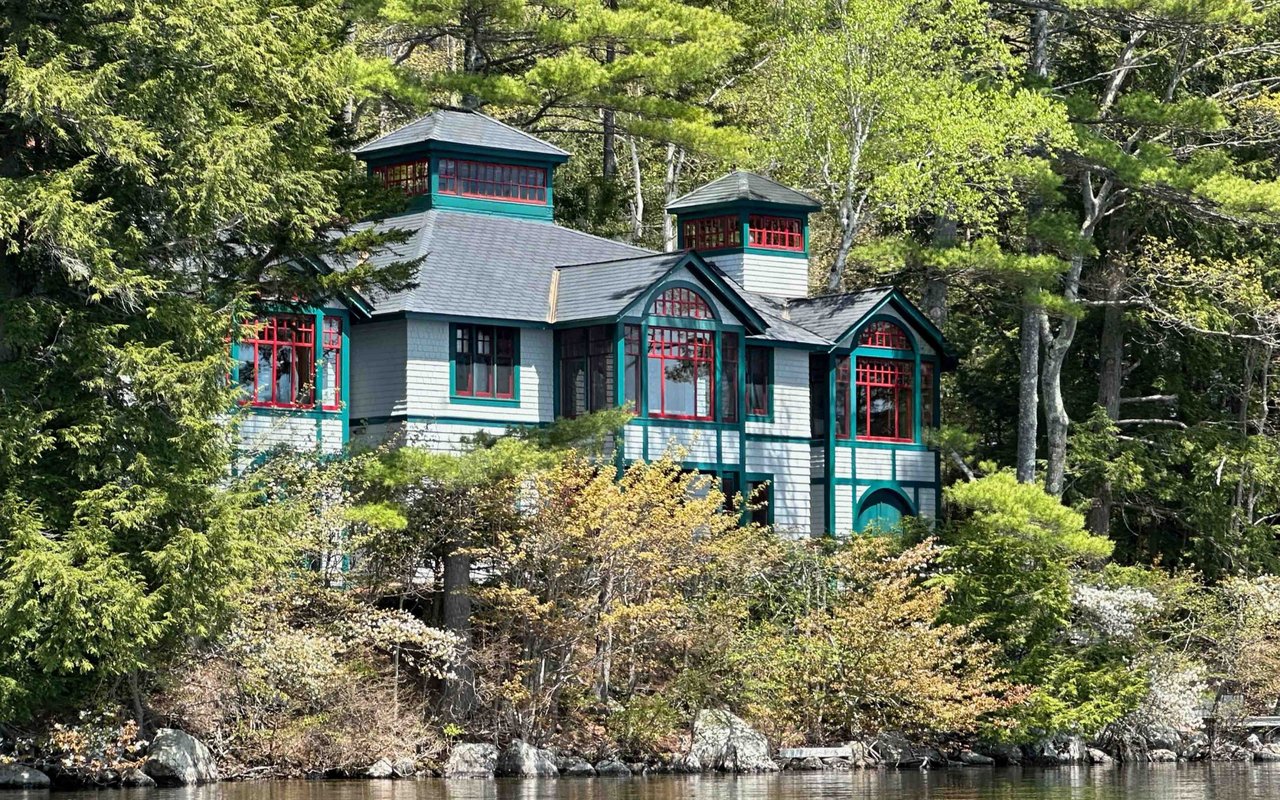
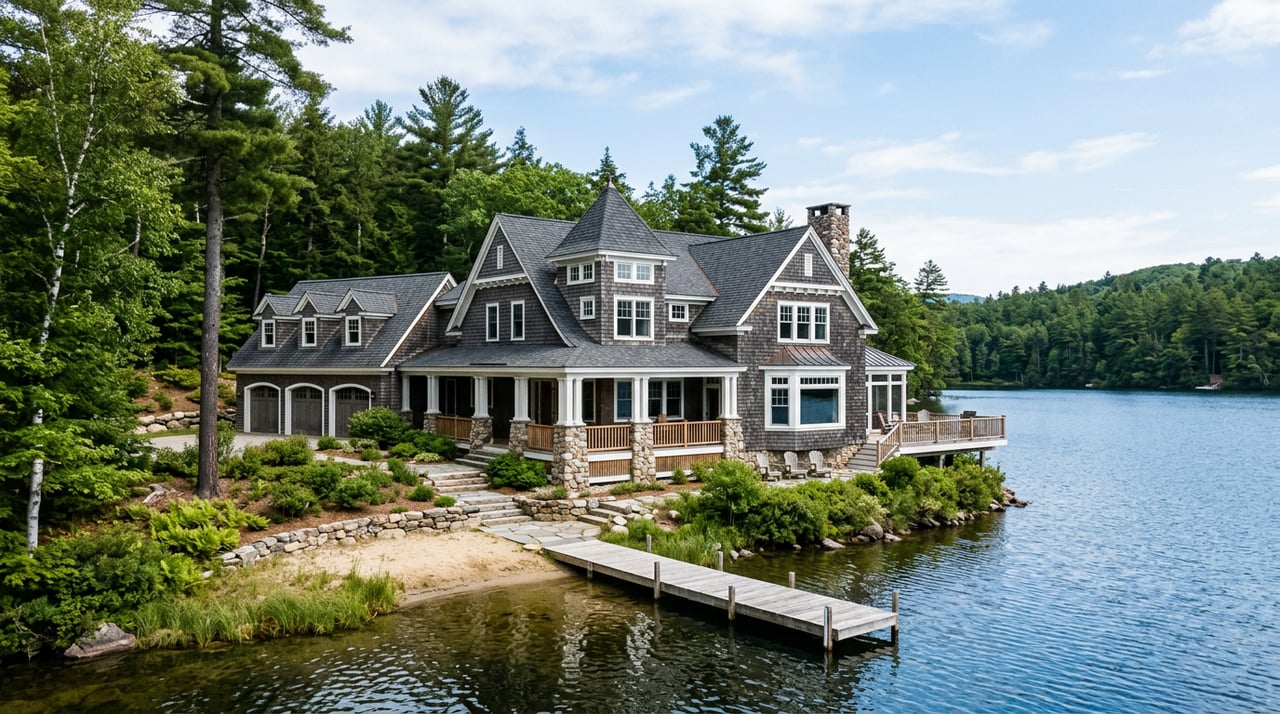
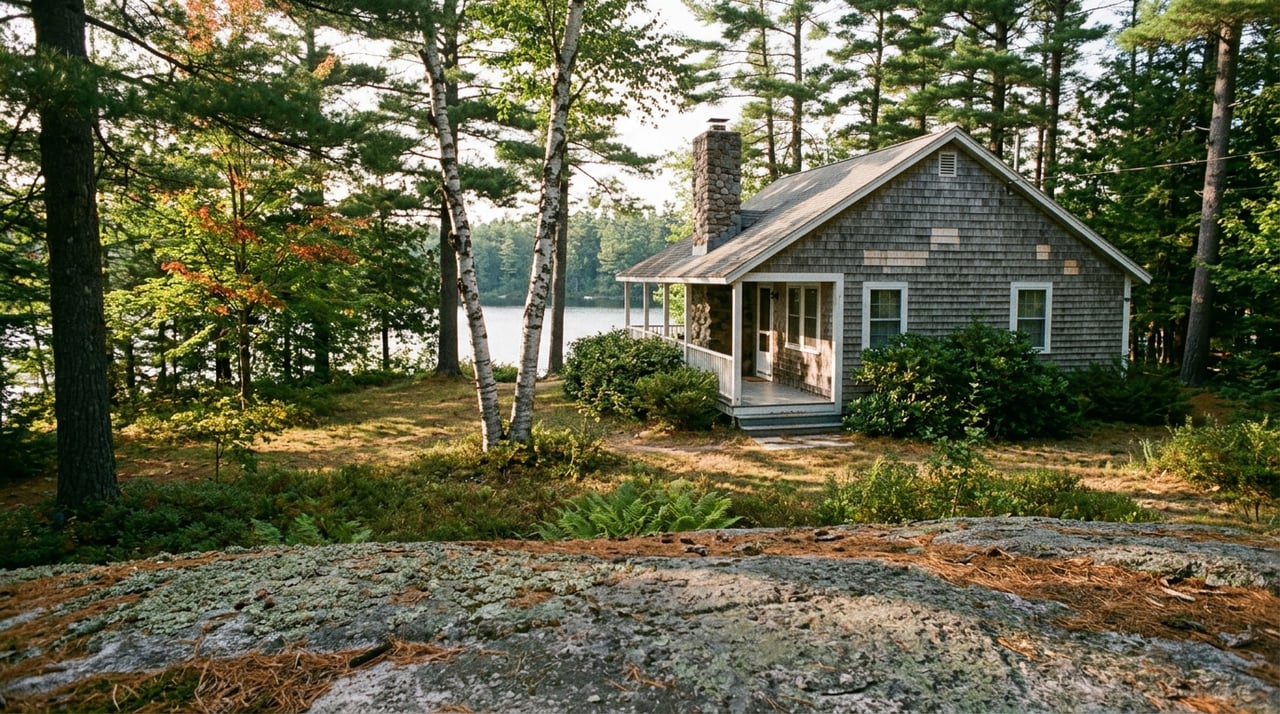
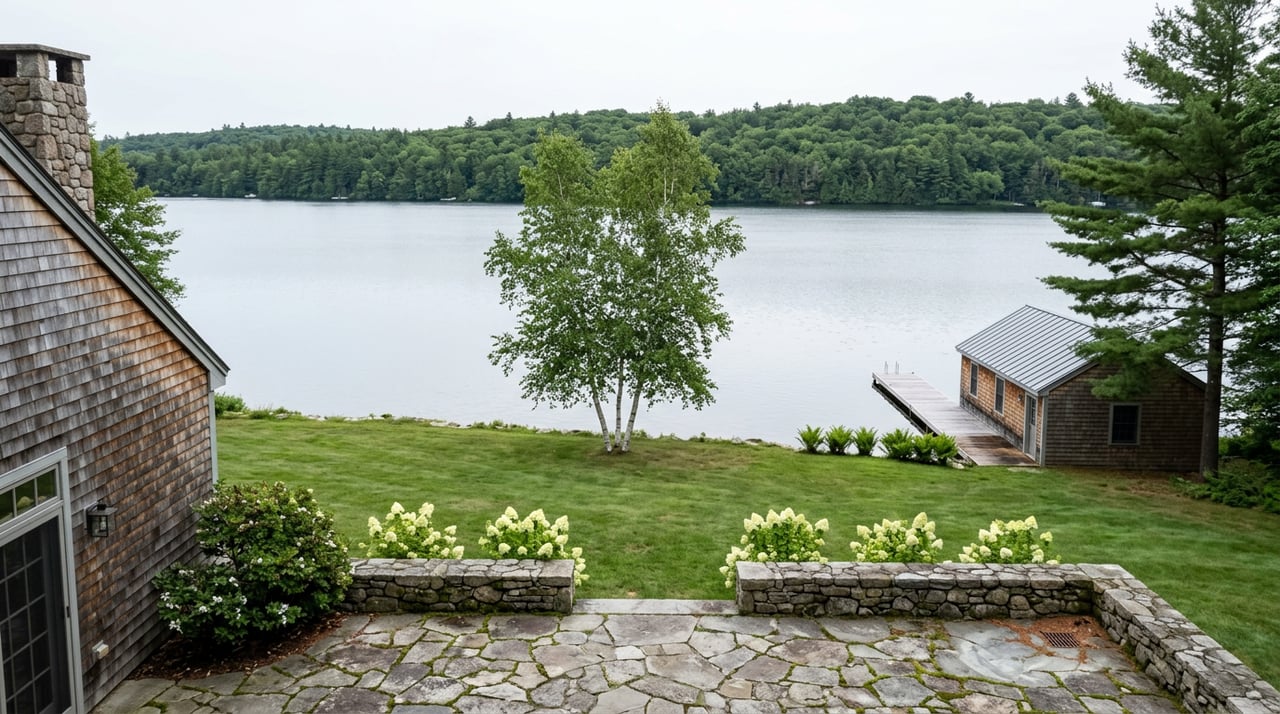
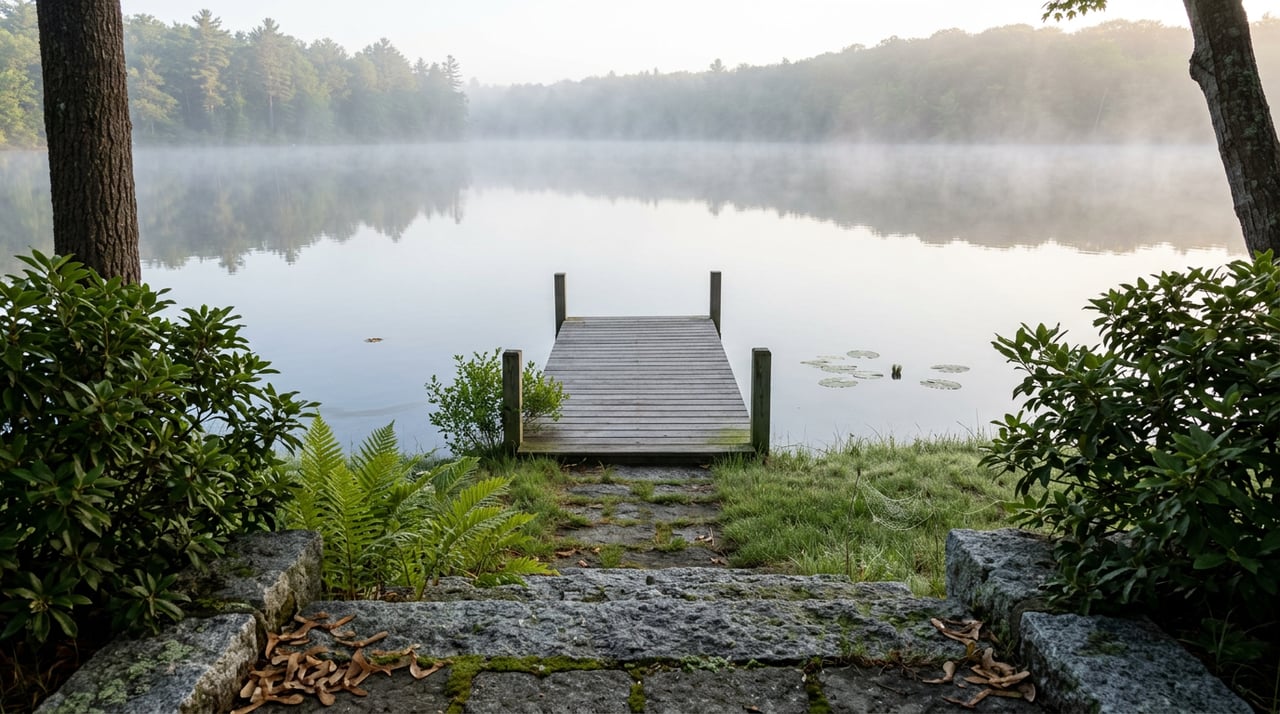
Walk a few hundred yards of Little Sunapee Road this fall and you can tour two camps within sight of each other, both facing the same water, both showing a dock in the listing photos, both promising the kind of morning coffee on the porch that sells lake property in New Hampshire. One of those camps conveys the water frontage outright in its deed. The other does not. Its owners have used the dock and the swimming area across the road for as long as anyone can remember, but the paper that transfers when you buy the house does not transfer the water.
That gap between what a family has always done and what a deed actually grants is the thing to understand before you write an offer on this lake. It shows up more often on Little Sunapee than on most of its neighbors, and it tends to surface at the worst possible moment: during a title search, at a closing table, or when a family is settling an estate.
A deeded easement is a recorded property right. It is written into the chain of title, it runs with the land when the property sells, and a title company can confirm it exists by pulling the record. If your deed grants you the right to cross a specific lot to reach the water, that right survives every future sale of both properties, yours and the one you cross.
Land that has simply been "historically used by current and prior owners," to borrow the exact phrase from one Little Sunapee Road listing this year, is a different legal animal. That language describes permissive or prescriptive use, not a recorded grant. Permissive use can be withdrawn by whoever owns the intervening lot next. Prescriptive use can sometimes ripen into an enforceable right, but only after a owner proves continuous, open use over a period of years, and only through a court proceeding, not a real estate closing. Neither is the same thing as an appurtenant easement that a title company will simply certify and move on.
Little Sunapee is sometimes called Twin Lakes locally, a nod to the long, narrow peninsula that nearly splits the water in half. Little Sunapee Road runs along both shores to serve camps on either side of that peninsula, which means a meaningful number of older cottages sit on the inland side of the road while their water frontage, their dock, their sandy entry point, sits across it.
That layout is exactly how these gaps get created. A family built a camp decades ago, walked across a quiet dirt road to the water because that is where the water was, and never thought to formalize the crossing because nobody was asking them to leave. The public boat launch on Little Sunapee Road, roughly half a mile east of the Interstate 89 interchange, sits in that same corridor. Decades of comfortable, unchallenged use is precisely the condition that lets an informal arrangement outlive the generation that started it, right up until a sale or an inheritance puts a lawyer and a title examiner into the picture.
The first place this surfaces is financing. Lenders and title insurers want confirmed, recorded access before they will write a policy or fund a mortgage against a property's advertised value. A title search on a camp with only historic, unrecorded water use will not turn up an easement, because there isn't one to find. Some government guidance on right-of-way requirements is blunt about this: VA loans, for example, require direct access to a public street, and lenders more broadly want a road maintenance or access agreement in hand before approving financing on private or shared access. A dock that has always been "yours" in practice can become a financing problem in underwriting.
The second place it costs you is at the negotiating table with a neighbor you may never have met. If the intervening lot between the camp and the water sells to someone new, that owner has no obligation to honor an arrangement that was never recorded. Fixing this after the fact usually means one of two things: a negotiated, recorded easement with the current owner of the intervening land, which can carry a price or a maintenance obligation attached to it, or a quiet title action asking a court to recognize a prescriptive right based on decades of continuous use. Both take time. Neither is something a buyer wants to discover mid-transaction.
This is where it stops being a legal curiosity and starts being a family matter. Camps on lakes like this one are often held for two or three generations before they change hands. Children who grew up walking across Little Sunapee Road to the dock every summer never had a reason to ask whether that walk was legally guaranteed. Nobody questions a right that has never been tested.
The test arrives when the camp finally needs to be sold or settled among heirs. A title search that was never run while the family owned the property gets run for the first time when a buyer's attorney orders one, and that is when everyone learns whether the water access their family enjoyed for fifty years was ever actually theirs to convey. For a family managing an estate transition, that discovery can complicate timing, valuation, and the ability to close cleanly with a buyer who was expecting deeded frontage.
If you are looking at a camp on Little Sunapee Road, or helping settle one that has been in the family for years, a few steps are worth doing before price becomes the only conversation.
If my family has used a stretch of shoreline for 40 years, don't we have a right to it by now? New Hampshire law does allow a prescriptive easement to form through long, continuous, open use, but it has to be established through a court, not assumed at closing. A lender or title company will generally not treat an unproven prescriptive claim as equivalent to a recorded right, which means it functions as a backstop argument rather than something you can rely on to finance or insure a purchase.
Does this affect whether I can build or replace a dock? Even where access is fully settled, adding or rebuilding a dock on New Hampshire lake shoreline involves its own state permitting questions separate from who holds the underlying right to reach the water. Access and construction permission are two different approvals, and clearing one does not clear the other.
Is this only a Little Sunapee issue? No, but the lake's peninsula shape and the road running along both shores make the pattern more common here than on lakes with a single, continuous shoreline road. It is worth checking on any older New Hampshire lake camp, but it is worth checking first on this one.
None of this makes Little Sunapee a lake to avoid. It makes it a lake where the deed deserves the same attention as the view. If you are weighing a camp on this stretch of road, or you are the family finally deciding what to do with one that has been in the family for decades, Pamela Perkins can help you read the title the way you read the water, carefully, and with the local knowledge that tells you what actually needs to be checked before you fall in love with the dock in the photo.
Discover additional insights, market perspectives, and curated real estate guidance.

With generational ties to Lake Sunapee and a record that defines the New Hampshire luxury market, Pam Perkins represents a level of knowledge, discretion, and performance that few can match. Her clients trust her not only because of what she’s sold — but because of what she knows.
Connect with New Hampshire’s Top Broker